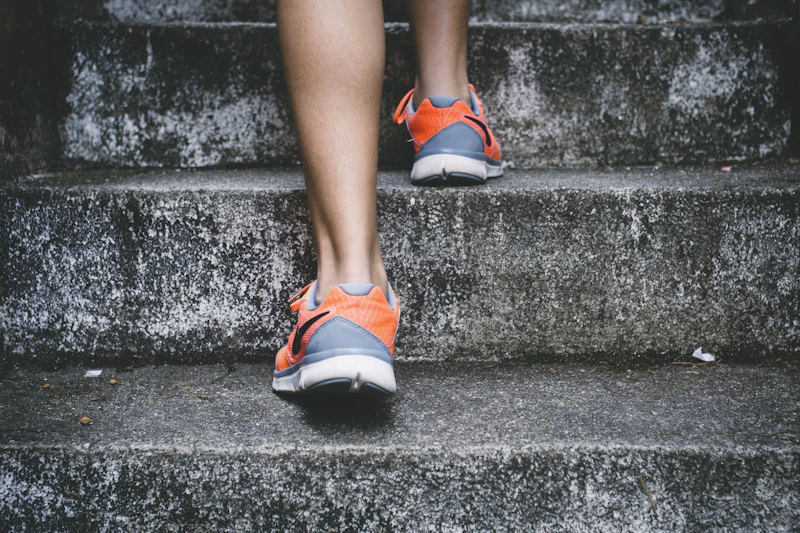
Introduction: Walking as a Metabolic Superpower
In fitness discussions, walking is often dismissed as too low-intensity to drive significant weight loss. Many believe that to burn fat, they must engage in high-intensity interval training (HIIT) or exhaustive running. However, clinical studies show that walking is one of the most effective and sustainable tools for permanent fat loss. Unlike high-intensity running, walking does not trigger cortisol spikes or raise ghrelin levels (which cause post-workout hunger spikes). It is low-impact, preserves joint health, and can be maintained daily. In this guide, we will examine the mathematics of energy expenditure during walking, explain the concept of NEAT, and show you how to calculate your step calorie budget using our [calorie calculator](/calculators/calorie) and [TDEE calculator](/calculators/tdee).
The Mathematics of Walking: The Energy Cost of Transport
To understand how many calories you burn while walking, exercise scientists use the **Metabolic Cost of Transport (CoT)** equation. The calorie burn rate is determined by three variables: your body weight, your walking speed, and the incline of the surface.
At a standard speed of 3.0 mph (a moderate pace), a person burns approximately **0.04 calories per pound of body weight per minute**. Let us calculate this:
- **150 lb person walking for 60 minutes**:
150 lbs × 0.04 calories/lb/min × 60 min = **360 calories**.
- **250 lb person walking for 60 minutes**:
250 lbs × 0.04 calories/lb/min × 60 min = **600 calories**.
Because heavier individuals must move more mass against gravity, their energetic cost is significantly higher. You can calculate your baseline resting energy burn with our [BMR calculator](/calculators/bmr).
NEAT Optimization: Why Fidgeting and Steps Beat the Gym
Non-Exercise Activity Thermogenesis (NEAT) is the energy expended for everything we do that is not sleeping, eating, or sports-like exercise. As discussed in our [TDEE guide](/blog/calories-vs-weight-loss), NEAT represents up to 30% of your Total Daily Energy Expenditure, whereas gym workouts typically account for only 5% to 10%.
Adding 10,000 steps to your daily routine covers approximately 4 to 5 miles. For a 200 lb person, this burns an extra **400 to 500 calories per day**, adding up to 3,500 calories per week — the equivalent of one pound of fat. Hitting this step target daily creates a steady, sustainable calorie deficit without restricting food volume. To check your active calorie burn, use our [calorie calculator](/calculators/calorie).
Protecting Joint Health and Preserving Muscle
High-intensity cardio (like running or jumping jacks) can place a mechanical force of up to 3 to 4 times your body weight on your ankle, knee, and hip joints. For an overweight individual, this can lead to joint injuries that stall their fitness journey. Walking keeps impact forces to only 1.2 times body weight, protecting cartilage.
Additionally, walking does not place significant recovery demands on the central nervous system. This means it can be combined with resistance training to preserve muscle tissue while burning fat. Consuming enough protein is key; calculate your daily target with our [protein calculator](/calculators/protein).
Frequently Asked Questions (FAQs)
How many steps equal one mile?
On average, 2,000 steps equal one mile. This varies based on your height and stride length. A taller person has a longer stride, requiring fewer steps per mile. You can track your active distance and calibrate it on our [weight loss calculator](/calculators/weight-loss).
Should I walk before or after meals?
Walking for 10 to 15 minutes immediately after meals is highly effective for metabolic health. It stimulates GLUT-4 receptors in skeletal muscles, drawing glucose out of the blood without requiring insulin spikes. This lowers post-meal blood sugar and aids digestion.
Is walking on an incline better for fat loss?
Yes. Walking on an incline increases the Metabolic Cost of Transport. Walking at 3.0 mph on a 6% incline increases your calorie burn rate by approximately 50% compared to walking on flat ground, while also engaging your hamstrings, glutes, and calves. Calculate your active expenditure with our [TDEE calculator](/calculators/tdee).